
Processed Meat: What It Is and Why It Matters
Processed meat is one of the most studied food categories in nutrition research—and one with some of the clearest health concerns. Here's what you need to know about this category of ultra-processed foods.
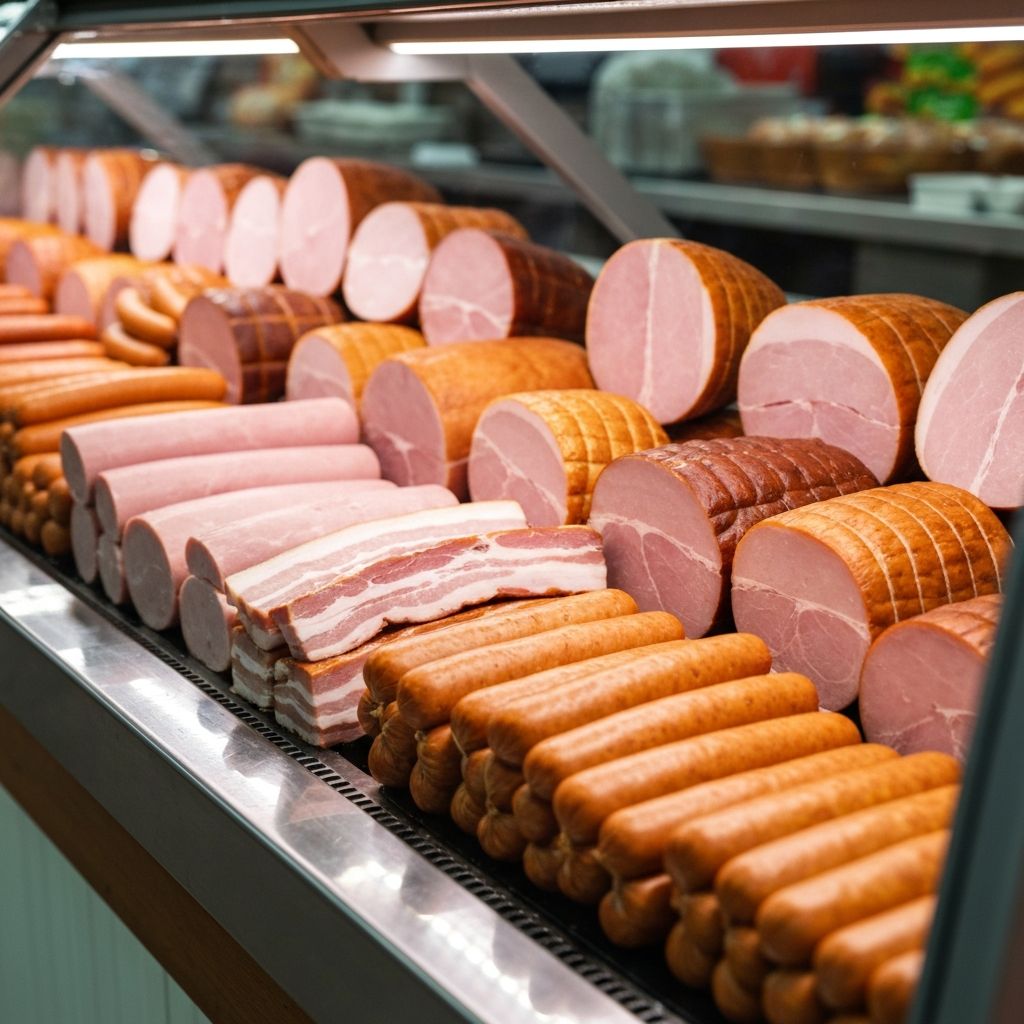
Processed meats are a significant source of ultra-processed foods in many diets
Educational Information Only
This content is for educational and awareness purposes only. It is not medical or dietary advice. Individual situations differ—please consult a healthcare professional for personalized guidance.
Key Takeaways
- Processed meat includes any meat preserved by smoking, curing, salting, or adding chemicals
- Common examples: bacon, ham, hot dogs, sausages, deli meats, pepperoni
- WHO classifies processed meat as a Group 1 carcinogen (linked to colorectal cancer)
- Most processed meats also qualify as ultra-processed foods
- Even moderate reductions can benefit health—you don't need to eliminate it entirely
See how processed your meals really are
Many 'normal' meals with bacon, sausages, or deli meats score higher on UPF than you'd expect. Scan your plate with UPFScore to find out.
What Counts as Processed Meat?
Processed meat refers to meat that has been transformed through salting, curing, fermentation, smoking, or other processes to enhance flavor or improve preservation. This includes:
- Bacon
- Ham
- Hot dogs
- Sausages
- Salami
- Pepperoni
- Deli/lunch meats
- Corned beef
- Beef jerky
- Canned meat
- Meat-based sauces
- Chicken nuggets (most)
Want to see your meal's UPF Score?
Snap a photo and get an instant breakdown of ultra-processed foods on your plate.
Get My UPF Score Early AccessProcessed Meat, Ultra-Processed Foods, and Classification
Most processed meats also qualify as ultra-processed foods under the NOVA classification because they contain additives beyond simple preservation:
- Nitrates and nitrites: Used for preservation and pink color
- Phosphates: Used to retain moisture
- Flavor enhancers: Added to boost taste
- Colorings: To make products look more appealing
- Emulsifiers and fillers: To improve texture and reduce costs
Learn more about the NOVA classification and ultra-processed foods.
Health Risks Linked to Processed Meat
In 2015, the World Health Organization's International Agency for Research on Cancer (IARC) classified processed meat as a Group 1 carcinogen—meaning there's sufficient evidence it causes cancer in humans, specifically colorectal cancer.
Research has also linked processed meat to:
- Heart disease: Higher rates of cardiovascular problems
- Type 2 diabetes: Increased risk with regular consumption
- Stomach cancer: Some evidence of association
- All-cause mortality: Higher death rates in those who eat most processed meat
For the broader picture, see our guide to ultra-processed food health risks.
Practical Ways to Cut Down on Processed Meat
You don't need to eliminate processed meat entirely—even modest reductions can help:
- Swap deli meats for leftover roast chicken or canned fish
- Try legumes (beans, lentils) as protein in some meals
- Choose fresh fish or poultry over processed options
- Use processed meat as a flavoring rather than main ingredient
- Reserve bacon and sausages for occasional meals, not daily staples
For more ideas, check our guide to simple food swaps.
Related Guides
Health Risks of UPF →
The broader health impacts of ultra-processed foods.
What Is Ultra-Processed Food? →
Understanding the NOVA classification system.
Frequently Asked Questions
Is all bacon processed meat?
Yes. Bacon is cured or smoked, which qualifies it as processed meat. This includes turkey bacon and other alternatives. The processing method, not the animal source, determines the classification.
Is rotisserie chicken processed meat?
No. Rotisserie chicken is typically just cooked chicken with seasoning—it's not cured, smoked, or preserved with chemicals. It's considered minimally processed and is a good alternative to deli meats.
How much processed meat is safe to eat?
Health organizations like the World Cancer Research Fund recommend eating little to no processed meat. If you do eat it, treat it as an occasional food rather than a daily staple. Even reducing from daily to weekly consumption may provide health benefits.
Are plant-based meat alternatives healthier?
It depends. Some plant-based alternatives are highly processed themselves with long ingredient lists. They may avoid the specific risks of processed meat but aren't necessarily 'health foods.' Whole food protein sources (beans, lentils, fish, eggs) are generally better choices.
Sources & Further Reading
- IARC Monographs on Red and Processed Meat
WHO classification of processed meat as a Group 1 carcinogen.
- World Cancer Research Fund - Meat and Cancer
Research summary on the relationship between processed meat and cancer risk.
- Harvard Health - Processed Meats
Overview of health risks associated with processed meat consumption.
- Processed meat and cardiovascular disease
Meta-analysis on processed meat and heart disease risk.
About UPFScore
UPFScore is on a mission to help people understand and reduce ultra-processed foods in their diet. Our AI-powered app makes it easy to see how processed your meals really are.
Built by someone passionate about making healthy eating simpler and more accessible for everyone.
Learn more about us and our mission →Check Your Meal's UPF Score
Ready to see how processed your meals really are?
Processed meat is often a hidden driver of high UPF scores. Scanning your meals helps you see exactly how much it contributes to your diet.
Join the free early access list to try the app as soon as it's ready and get occasional tips on cutting ultra-processed foods. We'll only email you with important updates—no spam, ever.
Get My UPF Score Early Access