
Ultra-Processed Food Health Risks: What Research Shows
Scientific research increasingly points to connections between high ultra-processed food consumption and various health conditions including obesity, heart disease, and diabetes. Here's what the evidence shows about potential risks.
Understanding your current intake is the first step. You can scan your meals with the UPFScore app to see how much ultra-processed food is on your plate.
Educational Information Only
This content is for educational and awareness purposes only. It is not medical or dietary advice. Individual situations differ—please consult a healthcare professional for personalized guidance.
Key Takeaways
- Large observational studies link high UPF intake to obesity, heart disease, and diabetes
- A landmark NIH study found people ate 500 more calories daily on ultra-processed diets
- Each 10% increase in UPF consumption is linked to 12% higher cardiovascular risk
- Reducing UPF is achievable with simple swaps and home cooking
- Awareness of what you're eating is the first step to reducing risk
How Ultra-Processed Foods Affect Your Body
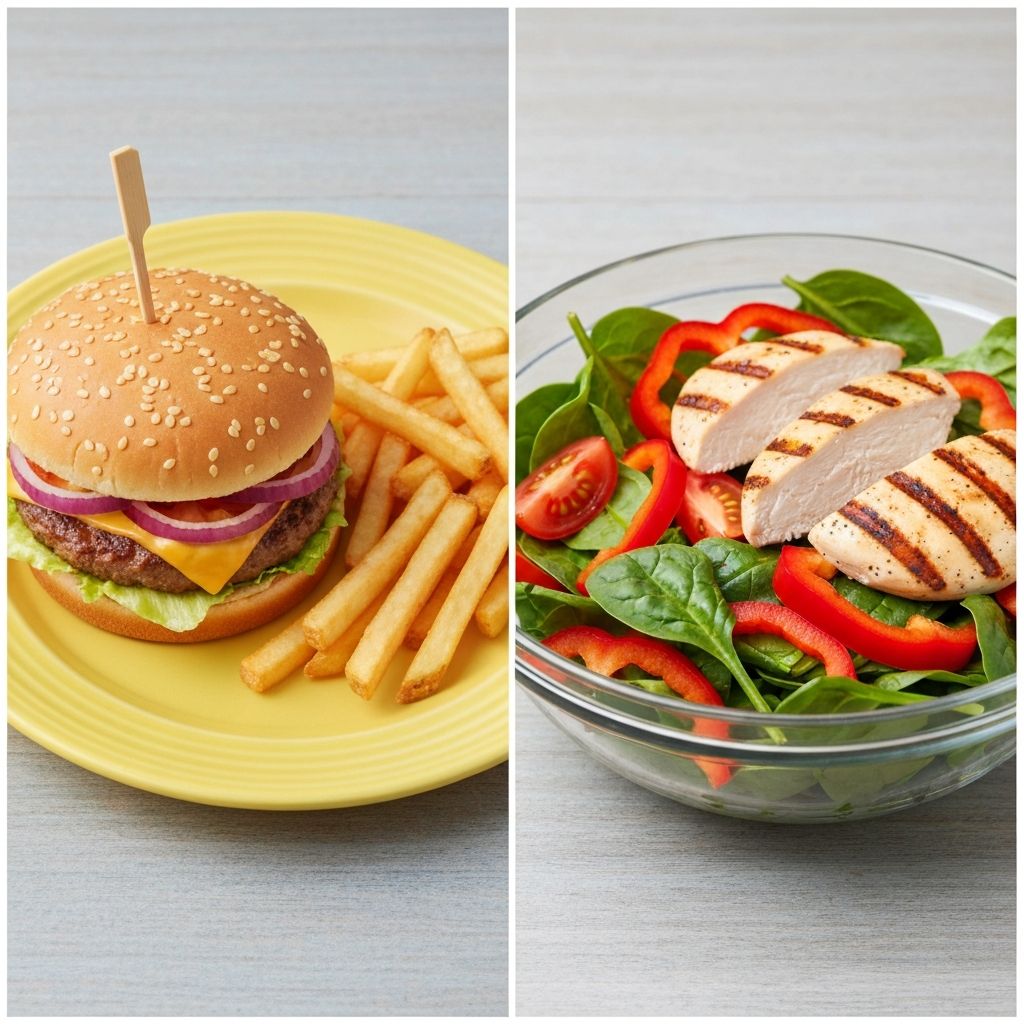
The contrast between ultra-processed meals and whole food alternatives
Ultra-processed foods share characteristics that may contribute to health problems:
- High in added sugars, unhealthy fats, and salt
- Low in fiber, vitamins, and minerals
- Designed to be hyper-palatable, making them easy to overeat
- Often consumed quickly, bypassing satiety signals
- May contain additives whose long-term effects are not fully understood
For background on what counts as UPF, see our guide on what is ultra-processed food.
Weight Gain and Obesity
A landmark 2019 NIH randomized controlled trial found that people eating ultra-processed diets consumed about 500 more calories per day compared to those eating unprocessed foods—even when both diets were matched for calories, sugar, fat, and fiber availability.
This suggests something about ultra-processed foods themselves—perhaps their texture, palatability, or speed of consumption—drives overconsumption beyond their nutritional content. Learn more in our ultra-processed food and weight loss guide.
Find the most problematic meals in your diet
UPFScore helps you identify which meals are highest in ultra-processed foods so you can make targeted changes.
Get My UPF Score Early AccessHeart Disease and Cardiovascular Risk
Research has linked higher ultra-processed food intake to increased cardiovascular risk. A 2021 meta-analysis found that each 10% increase in ultra-processed food consumption was associated with a 12% higher risk of cardiovascular disease.
Studies have found associations with higher blood pressure, elevated LDL cholesterol, and increased risk of heart disease and stroke.
Inflammation, Diabetes, Cancer, and Other Conditions
Beyond heart disease and obesity, research has found associations between high UPF consumption and:
- Type 2 diabetes
- Certain cancers (particularly colorectal)
- Chronic inflammation
- Depression and anxiety
- All-cause mortality
Learn more about ultra-processed foods and inflammation, UPF and mental health, or how UPF affects gut health.
3-Day UPF Awareness Challenge
Try this simple challenge to understand your current UPF intake:
- Day 1:Take photos of everything you eat. Don't change anything—just observe.
- Day 2:Review your photos. How many items came from packages vs. whole ingredients?
- Day 3:Swap just ONE ultra-processed item for a whole food alternative.
Small awareness leads to lasting change. The UPFScore app automates this process for you.
How to Reduce Your Risk
The good news is that reducing ultra-processed food intake is achievable with practical steps:
- Cook more meals at home using whole ingredients
- Choose whole foods over packaged alternatives
- Read labels and watch for long ingredient lists
- Make simple swaps: water instead of soda, whole fruit instead of fruit snacks
For practical tips, read our simple food swaps to cut ultra-processed food, how to reduce ultra-processed food intake, or learn how to read food labels.
Frequently Asked Questions
Can I reverse the effects of eating ultra-processed foods?
Yes. Research suggests that reducing UPF consumption leads to measurable health improvements. Weight, blood pressure, and metabolic markers often improve when people shift toward whole foods. The body is remarkably adaptable—it's never too late to start making changes.
How much ultra-processed food is too much?
There's no official safe limit, but studies suggest that keeping UPF below 20-30% of your diet is associated with better health outcomes. Currently, many people consume 50-60% of calories from UPF. Even small reductions can be beneficial.
Are some ultra-processed foods worse than others?
Yes. Sugar-sweetened beverages and processed meats tend to show the strongest associations with health risks. Ultra-processed foods that replace whole foods in your diet (like replacing fruit with fruit-flavored candy) are generally more problematic than occasional treats.
Sources & Further Reading
- NIH Ultra-Processed Diet Study (Cell Metabolism, 2019)
Landmark randomized controlled trial showing people ate 500 more calories daily on ultra-processed diets compared to whole food diets.
- Ultra-processed food and cardiovascular disease (BMJ, 2021)
Large meta-analysis finding each 10% increase in UPF consumption associated with 12% higher cardiovascular risk.
- WHO Europe report on ultra-processed foods (2024)
World Health Organization report summarizing health impacts of UPF and policy recommendations.
- Ultra-processed food consumption and health outcomes umbrella review (BMJ, 2024)
Comprehensive umbrella review of 45 meta-analyses examining links between UPF and 32 health parameters.
- Ultra-processed foods and cancer risk
Large UK Biobank study finding associations between UPF consumption and overall cancer risk.
Check Your Meal's UPF Score
Understanding your current intake is the first step to reducing health risks.
Use UPFScore to identify which of your regular meals are highest in ultra-processed foods—then make targeted swaps where they matter most.
Join the free early access list to try the app as soon as it's ready and get occasional tips on cutting ultra-processed foods. We'll only email you with important updates—no spam, ever.
Get My UPF Score Early AccessSee all our ultra-processed food guides →
About UPFScore
UPFScore is on a mission to help people understand and reduce ultra-processed foods in their diet. Our AI-powered app makes it easy to see how processed your meals really are.
Built by someone passionate about making healthy eating simpler and more accessible for everyone.
Learn more about us and our mission →