
What Is Ultra-Processed Food? A Simple Guide
Ultra-processed food refers to industrial formulations made mostly from substances derived from foods, plus additives. If you've wondered "what is considered ultra-processed food," this guide explains everything in plain language.
Understanding what's on your plate is the first step to eating better. You can scan your meal with the UPFScore app to instantly see how much ultra-processed food is on your plate.
Key Takeaways
- Ultra-processed foods contain ingredients you wouldn't find in a home kitchen
- The NOVA system classifies foods into 4 groups by processing level
- Common examples include soft drinks, packaged snacks, and instant noodles
- Research links high UPF consumption to various health issues
- Simple awareness of what's on your plate is the first step to eating better
What Is Considered Ultra-Processed Food? The Basics
Ultra-processed foods are industrial formulations made mostly or entirely from substances derived from foods, plus additives. They typically contain ingredients you wouldn't find in a home kitchen: flavor enhancers, emulsifiers, colorings, and other additives designed to make products more appealing and shelf-stable.
Unlike whole foods (fresh fruits, vegetables, meat, fish) or minimally processed foods (frozen vegetables, plain yogurt), ultra-processed foods undergo extensive industrial processing that fundamentally changes their nature.
The NOVA Classification System
The most widely used system for classifying food by processing level is the NOVA classification, developed by researchers at the University of São Paulo. It divides all foods into four groups:
- Group 1: Unprocessed or minimally processed foods (fresh fruit, vegetables, eggs, plain meat)
- Group 2: Processed culinary ingredients (oils, butter, sugar, salt)
- Group 3: Processed foods (canned vegetables, cheese, cured meats)
- Group 4: Ultra-processed foods (soft drinks, packaged snacks, instant noodles, reconstituted meat products)
Learn more about the difference between processed and ultra-processed foods.
Want to see your meal's UPF Score?
Snap a photo of any meal and get an instant breakdown of ultra-processed foods on your plate.
Get My UPF Score Early AccessUltra-Processed Foods Examples: What to Watch For
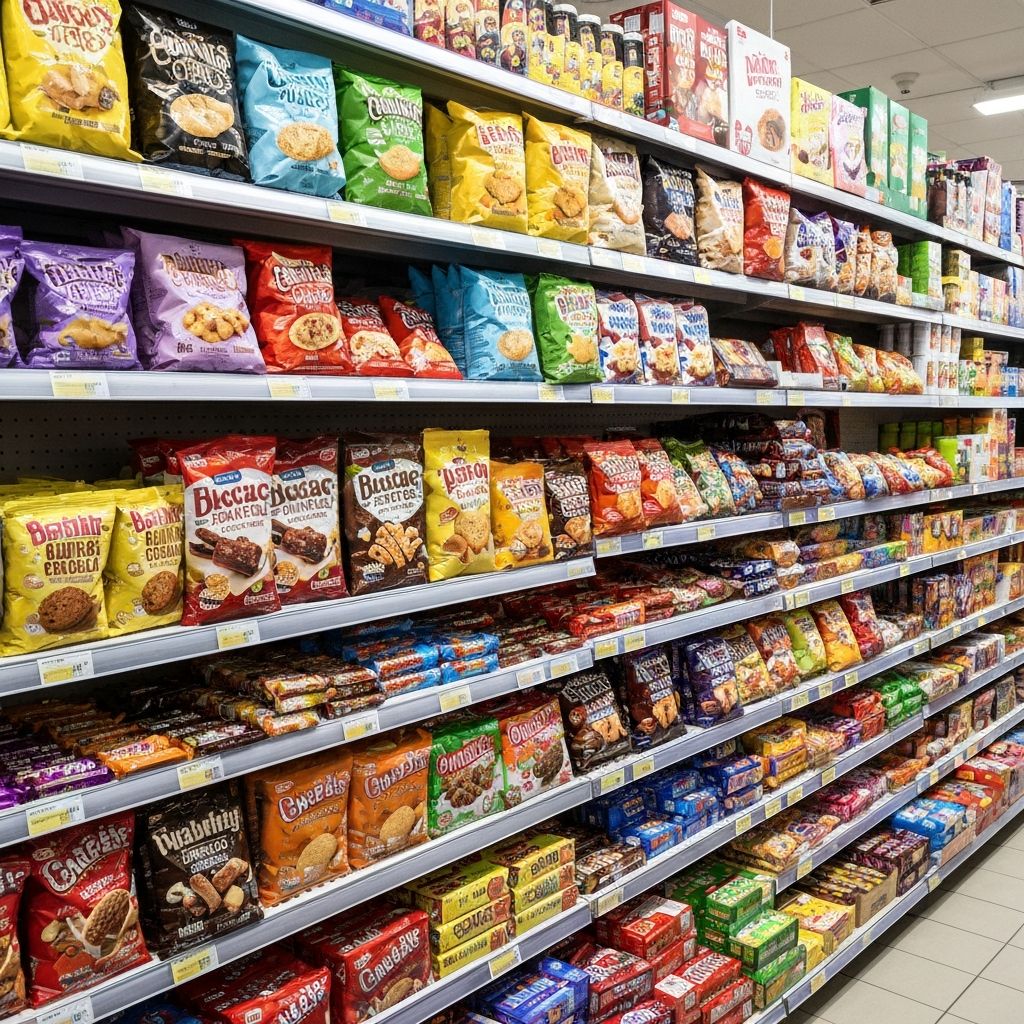
Ultra-processed foods dominate many supermarket aisles
Ultra-processed foods are everywhere in modern supermarkets. Here are some common examples of ultra-processed food:
- Soft drinks and energy drinks
- Packaged sweet and savory snacks
- Mass-produced bread and buns
- Instant noodles and soups
- Breakfast cereals (most)
- Reconstituted meat products (nuggets, hot dogs)
- Flavored yogurts
- Ice cream
- Packaged cookies and cakes
- Margarine and spreads
- Ready meals and frozen pizzas
- Infant formulas
For a comprehensive breakdown, see our ultra-processed foods list.
Why Ultra-Processed Food Matters for Your Health
Research increasingly links high consumption of ultra-processed foods to negative health outcomes. Studies have found associations between high UPF intake and increased risk of obesity, type 2 diabetes, cardiovascular disease, and certain cancers.
For more details, read about the health risks of ultra-processed foods, learn about ultra-processed food and mental health, or explore the link between UPF and inflammation.
5-Second UPF Check: Is This Ultra-Processed?
- 1.Does it have more than 5 ingredients?
- 2.Are there ingredients you wouldn't use at home (emulsifiers, maltodextrin, etc.)?
- 3.Is it designed to be hyper-palatable (salty + sweet + fatty)?
- 4.Does it have a long shelf life?
- 5.Is it heavily marketed to children or with health claims?
If you answered "yes" to 3 or more, it's likely ultra-processed.
How to Reduce Ultra-Processed Food
Understanding what's on your plate is the first step. For practical tips, check out our guides on how to avoid processed food and simple UPF swaps. You can also learn how to read food labels to spot UPF.
Frequently Asked Questions
Is all processed food bad for you?
No. The NOVA system distinguishes between simple processing (like freezing vegetables or canning beans) and ultra-processing. Many processed foods like cheese, canned fish, and plain yogurt can be part of a healthy diet. It's specifically ultra-processed foods that research links to health concerns.
How can I quickly tell if something is ultra-processed?
Look at the ingredient list. If it has more than 5 ingredients and includes things you wouldn't find in a home kitchen (emulsifiers, flavor enhancers, colorings), it's likely ultra-processed. Long ingredient lists with unfamiliar chemical names are a red flag.
What percentage of my diet should be ultra-processed?
There's no official recommendation, but research suggests lower is better. In many countries, UPF makes up over 50% of calorie intake. Aim to make whole and minimally processed foods the foundation of your diet, with UPF as occasional items rather than staples.
Sources & Further Reading
- NOVA Food Classification (FAO)
FAO overview of the NOVA classification system, the most widely used framework for categorizing foods by processing level.
- Ultra-processed foods: what they are and how to identify them
Peer-reviewed paper in Public Health Nutrition explaining the criteria for identifying ultra-processed foods.
- WHO Europe report on ultra-processed foods
2024 WHO report calling for urgent action to curb the rise of ultra-processed foods in European diets.
- Ultra-processed food consumption and health outcomes
Large umbrella review of 45 meta-analyses examining links between UPF consumption and various health outcomes.
Check Your Meal's UPF Score
Now that you know what ultra-processed food is, see how much is on your plate.
The UPFScore app uses AI to identify ultra-processed foods in your meals instantly—no label reading required.
Join the free early access list to try the app as soon as it's ready and get occasional tips on cutting ultra-processed foods. We'll only email you with important updates—no spam, ever.
Get My UPF Score Early AccessSee all our ultra-processed food guides →
About UPFScore
UPFScore is on a mission to help people understand and reduce ultra-processed foods in their diet. Our AI-powered app makes it easy to see how processed your meals really are.
Built by someone passionate about making healthy eating simpler and more accessible for everyone.
Learn more about us and our mission →