
Ultra-Processed Foods: Overview, Examples, and Next Steps
Ultra-processed foods have become a major part of modern diets—and a growing concern for public health. This guide gives you a quick overview and points you to deeper resources.
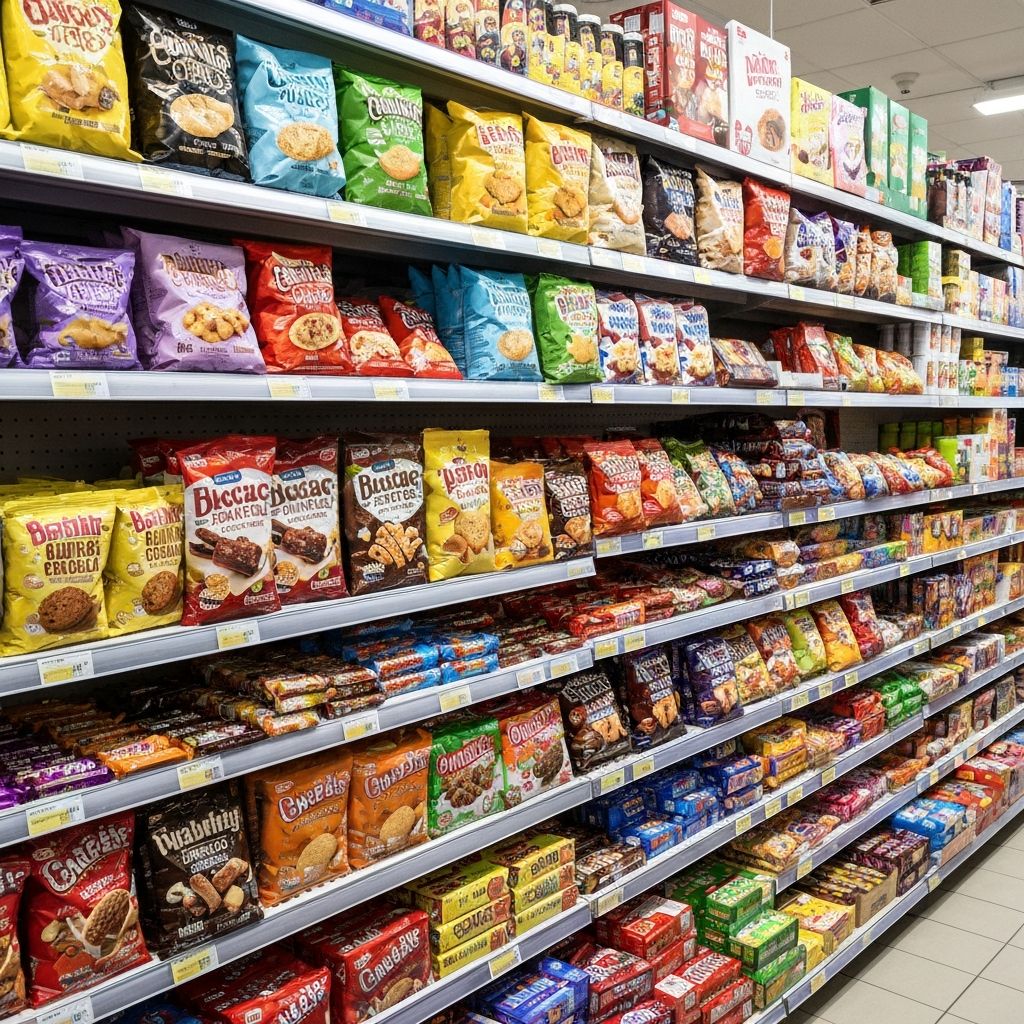
Ultra-processed foods dominate many supermarket shelves
Key Takeaways
- Ultra-processed foods contain industrial ingredients not found in home kitchens
- The NOVA system classifies foods into 4 groups by processing level
- Common examples: soft drinks, packaged snacks, instant noodles, most breakfast cereals
- Research links high UPF intake to obesity, heart disease, and other health issues
- You don't need to eliminate UPF—just be aware and reduce where it matters most
Want to see how processed your plate is?
UPFScore uses AI to analyze your meals and show you the percentage of ultra-processed foods—instantly.
What Counts as Ultra-Processed?
Ultra-processed foods are industrial formulations made mostly from substances derived from foods, plus additives. They typically contain ingredients you wouldn't use at home: emulsifiers, flavor enhancers, colorings, and preservatives.
The NOVA classification system, developed by researchers at the University of São Paulo, divides all foods into four groups based on processing level. Ultra-processed foods (Group 4) are the most highly processed.
Learn more about what ultra-processed food means →
Want to see your meal's UPF Score?
Snap a photo and get an instant breakdown of ultra-processed foods on your plate.
Get My UPF Score Early AccessCommon Ultra-Processed Foods in Everyday Life
You likely encounter these ultra-processed foods daily:
- Soft drinks and energy drinks
- Packaged sweet and savory snacks
- Instant noodles and soups
- Most breakfast cereals
- Frozen pizzas and ready meals
- Hot dogs, nuggets, and processed meats
- Packaged cookies and cakes
- Flavored yogurts and ice cream
- Mass-produced bread with additives
- Margarine and spreads
See a more complete ultra-processed food list →
Why People Are Worried About Ultra-Processed Foods
Research has found associations between high UPF consumption and:
- Weight gain and obesity: UPF is engineered to be easy to overeat
- Heart disease: Each 10% increase in UPF is linked to higher cardiovascular risk
- Type 2 diabetes: High UPF diets are associated with increased diabetes risk
- Gut health problems: UPF may negatively affect the gut microbiome
- Mental health: Some studies link high UPF intake to depression and anxiety
Where to Learn More and What to Do Next
Understanding ultra-processed foods is the first step. Here are resources to help you take action:
Health Risks of UPF →
Deep dive into the research on UPF and health.
UPF and Inflammation →
How UPF may promote chronic inflammation.
Gut Health and Diet →
The connection between UPF and gut health.
UPF and Children →
A parent's guide to reducing UPF for kids.
UPF and Weight Loss →
How reducing UPF may support weight goals.
Simple Food Swaps →
Practical alternatives to common UPF.
About UPFScore
UPFScore is on a mission to help people understand and reduce ultra-processed foods in their diet. Our AI-powered app makes it easy to see how processed your meals really are.
Built by someone passionate about making healthy eating simpler and more accessible for everyone.
Learn more about us and our mission →Check Your Meal's UPF Score
Ready to see how processed your meals really are?
This overview is just the start. UPFScore helps you apply what you've learned by showing you exactly how processed your actual meals are.
Join the free early access list to try the app as soon as it's ready and get occasional tips on cutting ultra-processed foods. We'll only email you with important updates—no spam, ever.
Get My UPF Score Early Access